Archives
- 2026-09
- 2026-08
- 2026-07
- 2026-06
- 2026-05
- 2026-04
- 2026-03
- 2026-02
- 2026-01
- 2025-12
- 2025-11
- 2025-10
- 2025-09
- 2025-03
- 2025-02
- 2025-01
- 2024-12
- 2024-11
- 2024-10
- 2024-09
- 2024-08
- 2024-07
- 2024-06
- 2024-05
- 2024-04
- 2024-03
- 2024-02
- 2024-01
- 2023-12
- 2023-11
- 2023-10
- 2023-09
- 2023-08
- 2023-06
- 2023-05
- 2023-04
- 2023-03
- 2023-02
- 2023-01
- 2022-12
- 2022-11
- 2022-10
- 2022-09
- 2022-08
- 2022-07
- 2022-06
- 2022-05
- 2022-04
- 2022-03
- 2022-02
- 2022-01
-
527 receptor Therefore the rational design of target compoun
2024-02-02
Therefore, the rational design of target compounds is based on the hybrid of attractive phenotypic bis-indole (5, Fig. 1) and sulfonamide moieties, in which the indole core might anticipate in hydrophobic interaction, and the functionality of sulfonamide group may involve in H-bonding with the site
-
br Materials and methods br
2024-02-02
Materials and methods Results RT-PCR showed that both arginase 1 and 2 were expressed in the OB of Korean roe deer (Fig. 1). Immunoblotting detected arginase 1 in the OB of roe deer (Fig. 2A, left lane) at a molecular weight of approximately 37kDa, which is the size of the enzyme in the rat O
-
Patients with cardiovascular disorders typically
2024-02-02
Patients with cardiovascular disorders typically have lower plasma apelin levels than matched healthy controls. For example, plasma apelin levels are reduced in patients with coronary artery disease (CAD), and among CAD patients with unstable angina or acute myocardial infraction there is a further
-
The putative residue apelin proprotein
2024-02-02
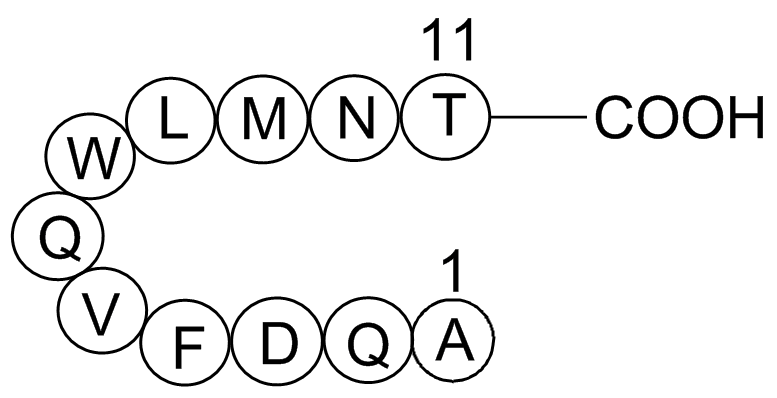
The putative 55-residue apelin proprotein (proapelin or apelin-55) is processed from a 77-residue preproprotein through removal of a 22-residue signal peptide (Table 1). Apelin-55 is further processed into bioactive isoforms of 36, 17, or 13 residues, likely through protease-mediated mechanisms. To
-
To the best of our knowledge
2024-02-01
To the best of our knowledge, this is the first study documenting the SCC modulatory effect at central and kidney level on the shift in the vasoconstrictor-vasodilator ratio of mRNA expression of angiotensin receptors toward vasoconstriction in XY-SCC and/or vasodilation in XX-SCC mice. From these r
-
In conclusion we demonstrated that in the skeletal muscle of
2024-02-01
In conclusion, we demonstrated that, in the skeletal muscle of rats with T1DM, CRBN levels increased and AMPK, Akt, GLUT4, PGC-1α, and FNDC5 levels decreased, resulting in increased fasting glucose levels. Aerobic exercise training decreased levels of CRBN, which was possibly mediated by AMPK, Akt,
-
RNA interference assays have shown that the inhibition of
2024-02-01

RNA interference assays have shown that the inhibition of AMPK expression leads to increases in TNF-α, IL-6 and cyclooxygenase-2 (COX-2) levels after LPS stimulus, whereas the transfection of macrophages with a constitutively active form of AMPKα1 results in decreased LPS-induced TNF-α and IL-6 pro
-
br Comparison to IWG In
2024-02-01
Comparison to IWG In addition to the NIA AA, the other group that has established diagnostic guidelines for AD that incorporate biomarkers is the IWG [64,74,75]. In the most recent formal IWG document, published in 2014 [75], the diagnosis of AD required the presence of cognitive symptoms plus an
-
In the MT SGL two regularization parameters need to
2024-02-01

In the MT-SGL, two regularization parameters need to be specified: λ1 and λ2. Using recent results on norm regularization (Banerjee et al., 2014), it is possible to express both parameters via a single parameter as follows: and (Meier et al., 2008, Banerjee et al., 2014), where and are computed
-
The CK catalyzes the reversible
2024-02-01
The CK catalyzes the reversible conversion of creatine into creatine phosphate using ATP and thereby releasing ADP. The CK isoenzymes, specifically localized in places where there is a demand and production of energy, are linked to a creatine/creatine phosphate shuttle (Wallimann et al., 1998). This
-
br Discussion Mycobacterium tuberculosis infection is a
2024-02-01
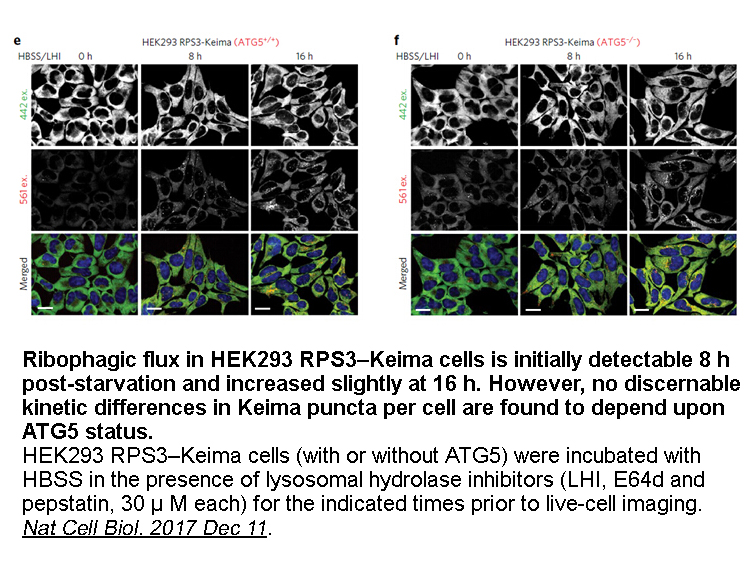
Discussion Mycobacterium tuberculosis infection is a main threat to mankind, with one third of the world population being infected. [9] Over nine million new cases of tuberculosis and two million deaths from this disease occur yearly worldwide. [10] The rising incidence of tuberculosis over the l
-
Several dehidropregnenolone derivatives functionalized at C
2024-02-01
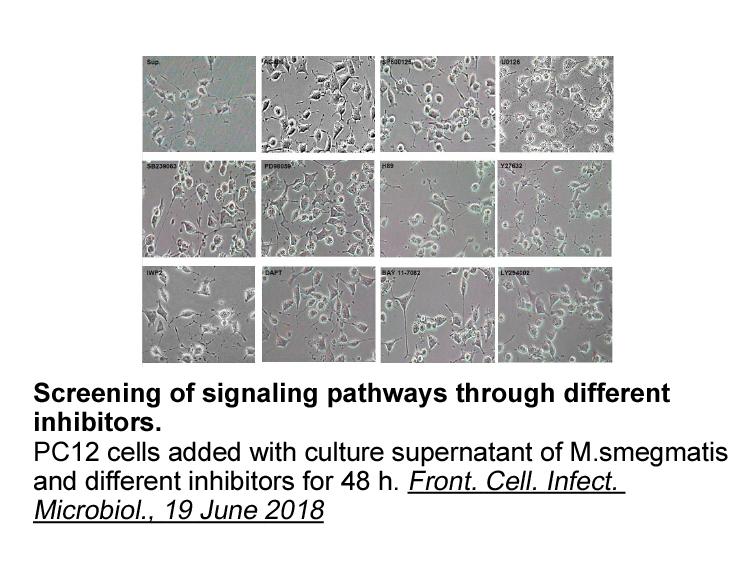
Several 16-dehidropregnenolone derivatives functionalized at C3, C4, C5 and C6 (Fig. 7) were prepared and evaluated as 5α-reductase inhibitors bearing in mind that after the formation of an enzyme-steroid complex a nucleophilic portion of the enzyme attacks the double bond of the steroid through Mic
-
7-Ethoxyresorufin sale In this scenario the receptor tyrosin
2024-02-01
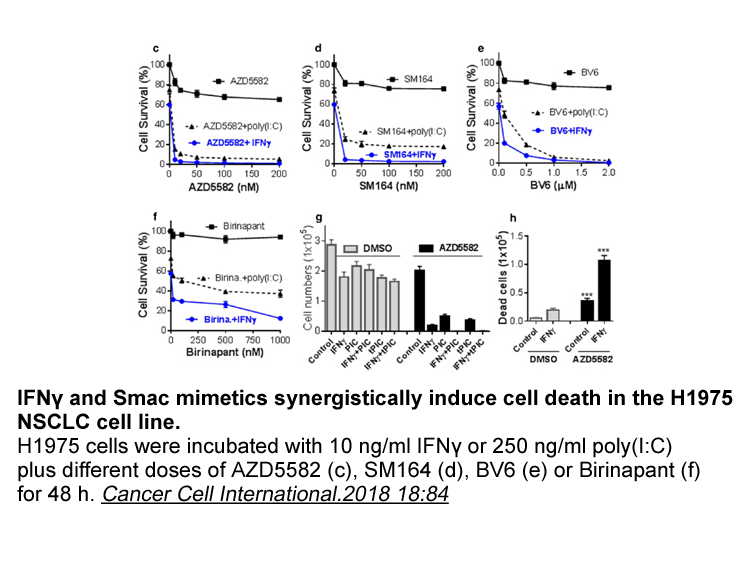
In this scenario, the receptor tyrosine kinase inhibitors (TKI), sunitinib, an anti-angiogenic agent, was tested in phase III trial, leading to a longer progressing free survival when compared to interferon (median: 11 vs. 5mo, respectively, hazard ratio (HR) = 0.42; 95% CI: 0.32–0.54; Pits 7-Ethoxy
-
GSK621 Because of the formation of phosphoenzyme intermediat
2024-02-01
Because of the formation of phosphoenzyme intermediates, the enzymatic GSK621 of P-ATPases can be divided into steps that include a kinase activity, by which an aspartate residue on the enzyme is phosphorylated, and a phosphatase activity, by which the phosphoenzyme is dephosphorylated. Another comm
-
Maintaining the normal vaginal fluid acidity is important
2024-02-01
Maintaining the normal vaginal fluid acidity is important for vaginal functions (Wagner and Levin 1984). Estrogen has been shown essential in maintaining the acidity of vaginal fluid, in which its deficiency could cause vaginal fluid pH to increase (Gorodeski et al. 2005). After menopause, low estro
7928 records 231/529 page Previous Next First page 上5页 231232233234235 下5页 Last page